BRYAN

LENCE

is probably
working

About Me

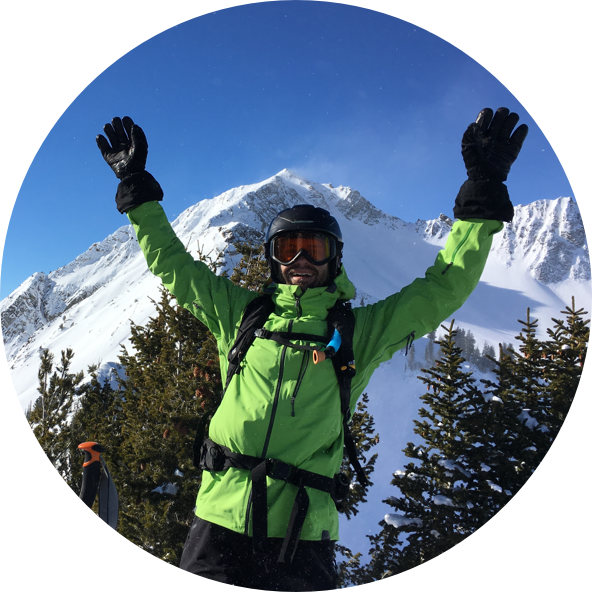
I was born in Salt Lake City, Utah, where I learned to ski. Then, I went to Stanford University, where I learned about history. After that, I worked at OpenPlans, where I learned about the real world. I've just graduated from NYU's Interactive Telecommunications Program, where I learned how people interact with technology.

Contact

bryan+NOSPAM (at) blence (dot) com

Resume available upon request

Past Work

  • Sesame

    Sesame

    A web-based collaborative instructional drawing program. Read more...

    Sesame is a web-based application that helps people create and edit life-changing instructional diagrams. Organizations such as MIT's D-Lab, the International Development Design Summit, and Afrigadget have created, documented, and tried to spread Do-It-Yourself machines that can change people's lives in the developing world. Although these machines are useful, there is no good way for a large group of people to create instructions that show how to build these devices.

    Sesame is a place for those finished products to become step-by-step visual instructions that anyone can edit and improve. All diagrams are completely open, drawn in SVG format, and can be edited in the browser or in a desktop application such as Adobe Illustrator or Inkscape.

    Sesame was a solo project, built for my thesis at NYU's Interactive Telecommunications Program, and presented to UNICEF on May 11, 2010 (video coming soon).

    Watch my thesis presentation of Sesame at ITP.

    Visit the Sesame website (Firefox only right now).

  • Flake

    Flake

    A mashup that tells you where to go skiing. Read more...

    Flake is a web mashup that combines Utah road closure data with snow reports along the Wasatch Front. After waking up, Utah skiers ask two questions: "how much did it snow last night?" and "are the canyon roads open?" The more new snow, the better the skiing. But, too much snow will close the narrow canyon roads that lead up to ski resorts. Flake gives skiers and boarders the information they need to quickly decide where to go, so they can spend more time on the slopes.

    Flake was a solo project built with Google App Engine.

    Next time you're in Utah, use the Flake website to plan your sking day.

  • Qurious

    Qurious

    Turn your television into more than just an idiot box. Read more...

    Qurious is an application built on Boxee. Qurious knows the actors, topics, and other information discussed on screen, and dynamically generates social content on request to help views learn more about a show. Pressing "pause" brings up a list of what is currently on screen, and allows viewers to engage on a deeper level with their favorite shows.

    The Qurious prototype was built with Juri Imamura, Kristin Loeb, and Josh Schelling. I focused on code and interaction design. The project was built in Python on top of Boxee.

    Qurious was shown at the Boxee Beta Event, and featured on Wired and Tubefilter.

    Watch the team introduce Qurious (fast forward 15 minutes).

    Visit the Qurious Homepage.

  • Barbot

    Barbot

    A mechanized bartender that picks your drinks. Read more...

    Barbot is a concept for a new, automated bar experience. Instead of directly ordering drinks, patrons answer a series of questions (such as “what’s your favorite animal?”) on a laptop or similar computing device. Upon completion of the questionnaire, Barbot selects and mixes a drink for the patron. The end result is a surprisingly fun way to order and receive a drink. Also, Barbot won’t get angry if you don’t tip.

    I built Barbot with Meredith Hasson, Sara Huong, and Brian Chung. I focused on the design and building of the drink dispenser and mechanized drink caddy. I also programmed the microcontrollers, and spent some time writing the software running on the laptop. We used Arduinos and Processing.

    Watch a video of Barbot in action.

  • Bestiary

    Bestiary

    A book that creates amazing animals at the turn of a page. Read more...

    Bestiary is a large, seemingly empty book that displays a new fantastical creature each time someone turns a page. Animal heads, legs, bodies, and other appendages are assembled from a collection of parts, and then given a name reflecting their make-up. For example, a "Mantidilloboon" is an animal assembled from praying mantis, armadillo, and baboon parts. At last count, Bestiary knew how to make just under 2,000 different animals.

    Bestiary was built with Caroline Brown. We both focused on coding and artistic direction. The project was built in Processing.

    Bestiary was shown at the ITP 2009 Spring show, and featured on Gizmodo.

    Watch a video of Bestiary.

  • Exploder

    Exploder

    See what's on your computer. Read more...

    Exploder is a software concept that helps you visualize what is on your computer and how it is organized. Often, I find that I don't know what exists inside a folder, especially if there are other folders inside it. Our computers store so much information that it can be hard to know, much less visualize, the complex file structure in which our data is stored. Exploder solves this problem by visually exploding a folder, showing everything contained within. Not only does it show specific folders, but it also gives an overall idea of how a set of folders are organized.

    Explode was created for 1' 2' 10', a class about usability and designing the same content for phones, computers, and televisions.

    See the full mockup.

  • Livable Streets

    Livable Streets Logo

    A community organizing site for alternative transportation advocates. Read more...

    Livable Streets is a community organizing site, produced by OpenPlans (formerly The Open Planning Project), for alternative transportation advocates. The site provides free, open source, web-based resources to visitors as well as access to an extensive video collection.

    I was very involved in the creation of Livable Streets, which meant folding 3 existing projects into one, as well as launching a brand-new project, StreetsWiki. I helped create a project plan and timeline, and ensured that team members made their deadlines. Once the project was underway, I organized and performed user testing as well as wrote and edited copy for much of the site. Leading up to the launch and shortly after, I communicated with site members to let them know about the changes, and addressed their concerns.

    Visit the Livable Streets website.